Mini Pig: A Craft Fair Seller’s Review
As an embroidery designer who has spent countless weekends behind a booth table, I know that not every design translates into a bestseller. Some designs look beautiful on a screen but get lost in the chaos of a busy market. Others become instant magnets for customer attention. Today, I am reviewing Mini Pig, a digital embroidery file that promises to add cuteness and playfulness to fabrics. My goal is to determine if this design has what it takes to elevate your craft fair product lineup and drive sales for your small shop.
First Impressions: The Farmhouse Charm Factor
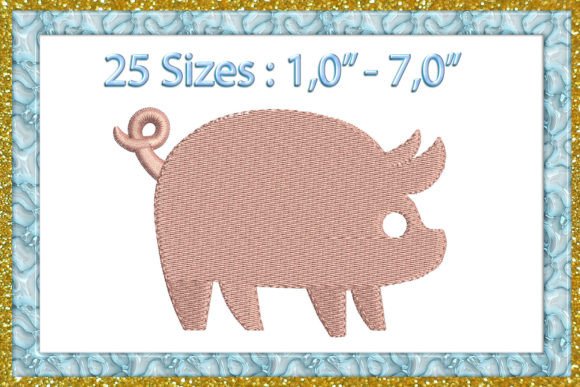
The moment I loaded the Mini Pig design into my software, the immediate impression was one of approachable warmth. In the current market, farmhouse aesthetics are not just a trend; they are a staple. This design fits squarely into that category, offering a friendly character that appeals to a broad demographic. It does not try to be overly complex or hyper-realistic. Instead, it leans into a stylized, cute interpretation of farm animals. This is crucial for embroidery because overly detailed designs can often look messy when stitched out on textured fabrics.
For an Etsy seller or boutique maker, the visual appeal of Mini Pig lies in its simplicity. It feels rustic yet modern enough to fit into contemporary home decor. When evaluating a new machine embroidery design, I always ask: Does it communicate its theme instantly? With Mini Pig, the answer is yes. A customer walking past your booth will recognize the subject matter from ten feet away. This instant recognition is vital for stopping power in a crowded marketplace.
Product Versatility: Where Mini Pig Shines
The true test of any embroidery file is its versatility. Can it work on multiple substrates without losing its integrity? I evaluated Mini Pig across several potential products for a weekend craft fair display.
- Tote Bags: This is perhaps the strongest candidate for this design. A canvas tote bag provides a flat, stable surface that allows the pig’s features to stand out. As a tote bag design, it serves as a charming focal point. You can place it centrally for a bold statement or off-center for a more subtle, modern look.
- Aprons: Kitchenware is a huge seller at handmade markets. An apron embroidery featuring Mini Pig adds a touch of whimsy to functional items. It appeals to home cooks who love farmhouse decor. The design works well on the bib or the lower pocket area, depending on the hoop size you are using.
- Tea Towels: For tea towel embroidery, placement is key. Because towels have a loose weave, you must ensure the stitch density is appropriate. Mini Pig appears to have a balanced structure, making it a good candidate for kitchen linens, provided you use the right stabilizer.
- Embroidered Patches: Creating an embroidered patch with this design is a smart move for inventory diversity. Patches are low-cost, high-margin items that encourage impulse buys. Mini Pig’s compact nature makes it ideal for small hoops, allowing you to produce these quickly in batches.
Production Practicality for Small Shops
When running a small business, time is money. A design that requires constant thread breaks or excessive trimming is a bottleneck. From a production standpoint, Mini Pig seems designed for efficiency. The lines appear clean, suggesting that the digitizer considered the flow of the needle. For a small shop product, repeatability is essential. You need to know that the tenth item looks as good as the first.
Photography is another critical element. In online listings, your printable mockup or actual photos need to show clarity. Mini Pig photographs well because it likely uses distinct thread colors that contrast nicely against common fabric choices like cream, white, or light gray. This makes creating design assets for your social media and Etsy listings straightforward. You do not need expensive lighting to make the details pop; the design does the heavy lifting for you.
Careful-Use Notes and Technical Considerations
While Mini Pig is a strong contender, no design is universal. There are specific scenarios where you must exercise caution. As an experienced designer, I advise paying close attention to the following technical aspects before committing to a large production run.
Stitch Density and Fabric Texture: If you are stitching on thick fabrics like denim or textured towels, check the stitch density. If the design is too dense, it can cause puckering. Conversely, if it is too light, the fabric might show through the stitches. Always test on scrap fabric first. For dark fabrics, consider how the thread colors will interact. A cute pig might lose its charm if the snout blends into a black hoodie. Use contrasting threads to maintain the playful vibe.
Curved Surfaces: Stitching on caps or curved pouches requires precision. Ensure that the hoop size you select accommodates the curvature without distorting the image. Mini Pig should remain recognizable even if slightly warped by the curve, but avoid placing it too close to the seam of a cap where the hoop cannot reach evenly.
Small Details: If you plan to scale the design down significantly for tiny items like coin purses, inspect the smallest elements. Tiny lettering or intricate facial features can merge together if the design is reduced too much. Verify that the design retains its clarity at your intended size.
Enhancing Brand Consistency and Buyer Engagement
Using Mini Pig consistently across your product line can strengthen your brand identity. If your shop focuses on Farm Animals or rustic home goods, this design becomes part of a cohesive collection. Customers are more likely to buy multiple items if they see a consistent aesthetic. Imagine a display with a Mini Pig tote, a matching tea towel, and a set of patches. This creates a visual story that engages buyers and encourages larger purchases.
Furthermore, the emotional connection matters. People buy handmade items for the feeling they evoke. Mini Pig evokes joy and nostalgia. When customers smile at your booth display, they are more likely to engage with you. This human connection is the advantage of the handmade product over mass-produced goods. Your ability to present this design on high-quality materials enhances the perceived value of the finished product.
Final Designer Recommendations
Before you launch Mini Pig as a core part of your commercial embroidery offerings, take these final steps. First, confirm the licensing terms. Ensure that the digital embroidery file comes with commercial rights if you plan to sell the physical items. Second, create at least one real-world mockup. Do not rely solely on digital previews. Stitch it out on the exact fabric you intend to sell. Check the tension, the backing, and the overall finish.
Finally, consider your stabilizer choice. A cut-away stabilizer might be best for stretchy fabrics like t-shirts, while a tear-away could suffice for woven cottons. The right foundation ensures that Mini Pig looks professional and durable. By treating this design with careful attention to detail, you can transform a simple digital file into a standout star of your next craft fair. Whether for home decor or wearable art, Mini Pig offers the blend of charm and practicality that successful handmade businesses thrive on.